Industrial AI Automation for Food, Recycling & Manufacturing
Byte Motion's computer vision and robotics experts build custom AI vision solutions for demanding production tasks, and the automation on top of them: orchestrating the line and controlling robots and machines. Every solution runs on Optimus, our own software, customized for you and easy to integrate.
Proven Industrial AI for Food, Recycling & Industry
We are computer vision and robotics experts. We take on the vision tasks where standard systems fail, such as products that vary, overlap or arrive damaged, and build the automation that acts on the result: robot picking, routing pallets, stopping machines. Optimus, our own software, is the base we customize for each line. It is easy to integrate, and we work together with any robot integrator you prefer.
Our published work includes named deployments such as MOWI 3D pallet inspection in Norway, Nordic Recycling bag-opening automation with ABB robot integration, and EU Horizon 2020 computer vision research. We design around existing production lines rather than forcing rip-and-replace automation.
- 12+ — Documented case studies
- 2017 — Operating since
- EU — Scandinavia & Europe
- SLA — Support & maintenance
Automation Products
Each solution starts from Optimus, our own software, and is customized to your products, your line and your robots.
AI Quality Control System
Defects and missed products cost factories in rework and wasted output. Optimus uses AI vision to monitor your production line in real time, detect defects, and trigger corrective actions.
AI Vision-Guided Robotic Pick and Place Automation
Manual picking, sorting, and assembly are slow and error-prone at scale. Optimus uses AI vision to guide robots through pick and place and bin picking tasks with the precision and speed that manual labor cannot sustain.
Automated Pallet Inspection System
Pallets with damage, missing items, or labelling errors cause costly disputes when caught at the destination. Optimus automates visual inspection, count verification, and compliance checks before goods leave your facility.
Human Assisted Vision (HAV) AI System
Some classification tasks resist full automation and need human judgement at the point of decision. HAV combines computer vision with operator input to improve accuracy and consistency.
Industrial Dashboards for Manufacturing
Without real-time visibility, production teams react slowly and miss targets. Byte Motion builds dashboards that surface live KPIs, alarms, and inspection results across every line.
AI Waste Sorting System
Mixed waste streams are inconsistent and hard to sort reliably at line speed. Byte Motion deploys AI vision and robotics for bag detection, classification, and robot picking on conveyors.
Autonomous Drone Inspection & Navigation Systems
Inspecting obstructed or GPS-denied environments manually is costly and hazardous. Byte Motion builds autonomous drone systems using onboard sensing and AI-based visual navigation.
NVIDIA Isaac Development & Simulation
Hardware-only robotics development exposes integration failures late and slows iteration. Byte Motion uses NVIDIA Isaac digital twins and sim-to-real workflows to reduce deployment risk.
Pass, Reject or Manual Check
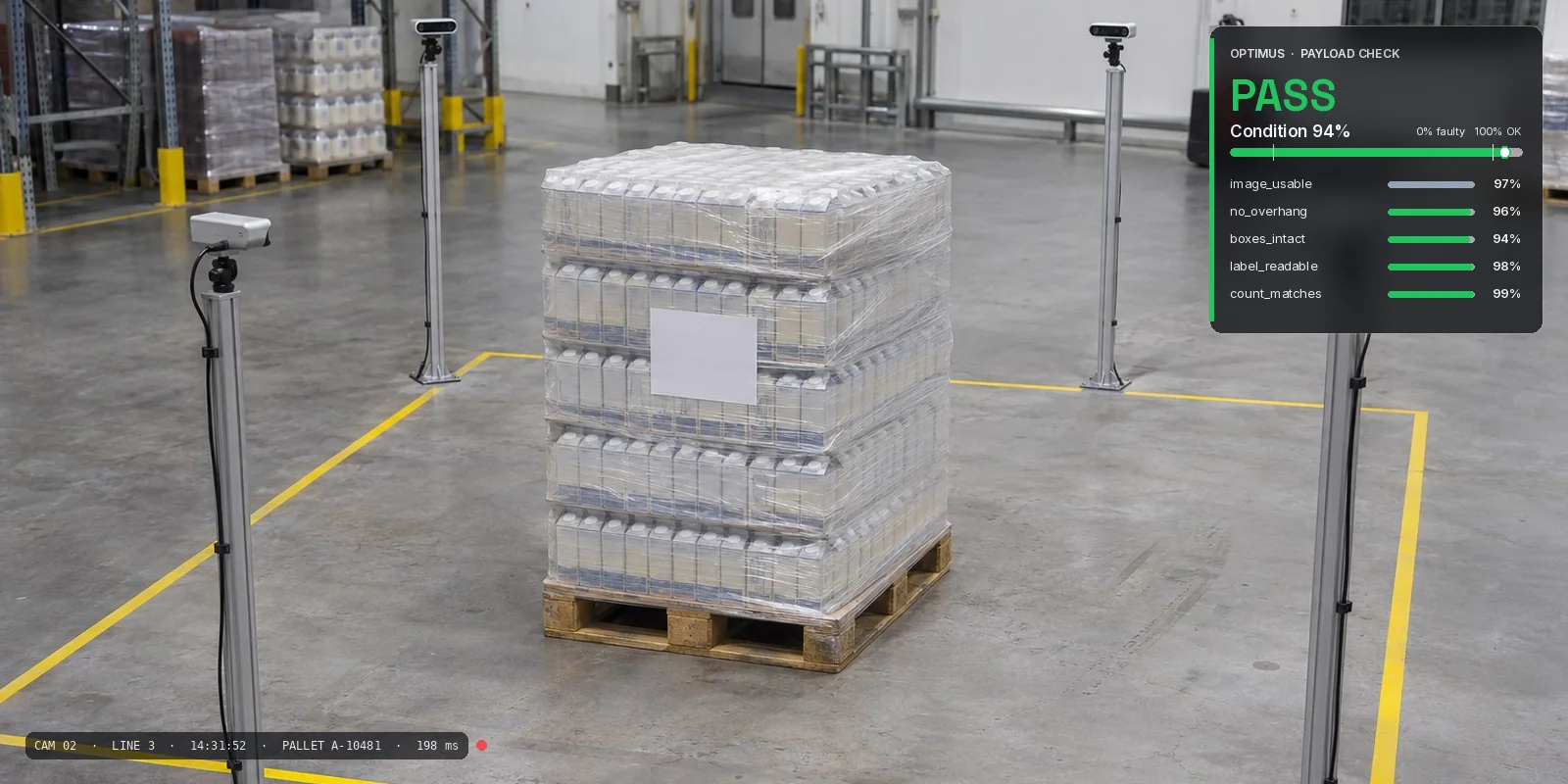
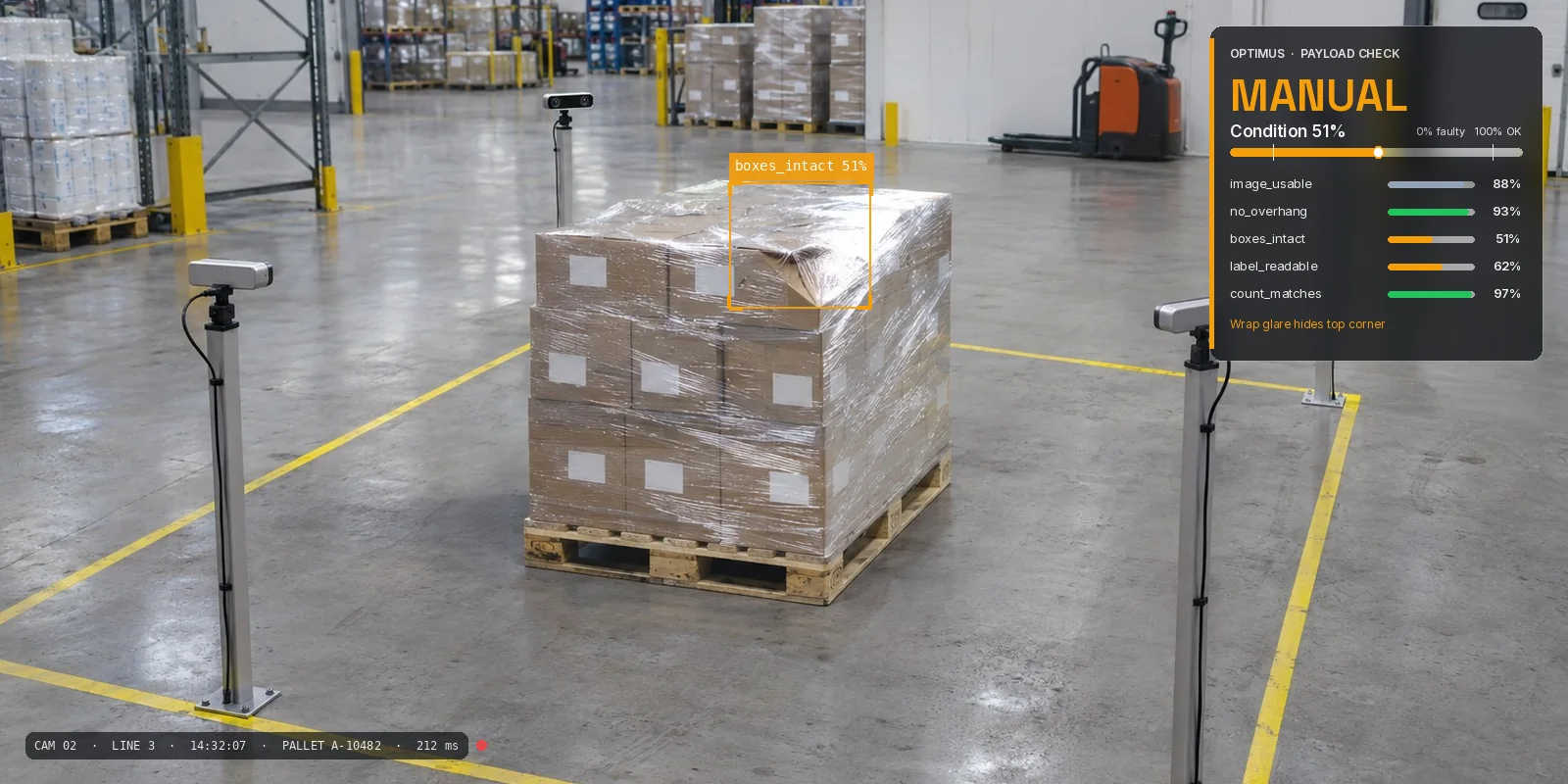
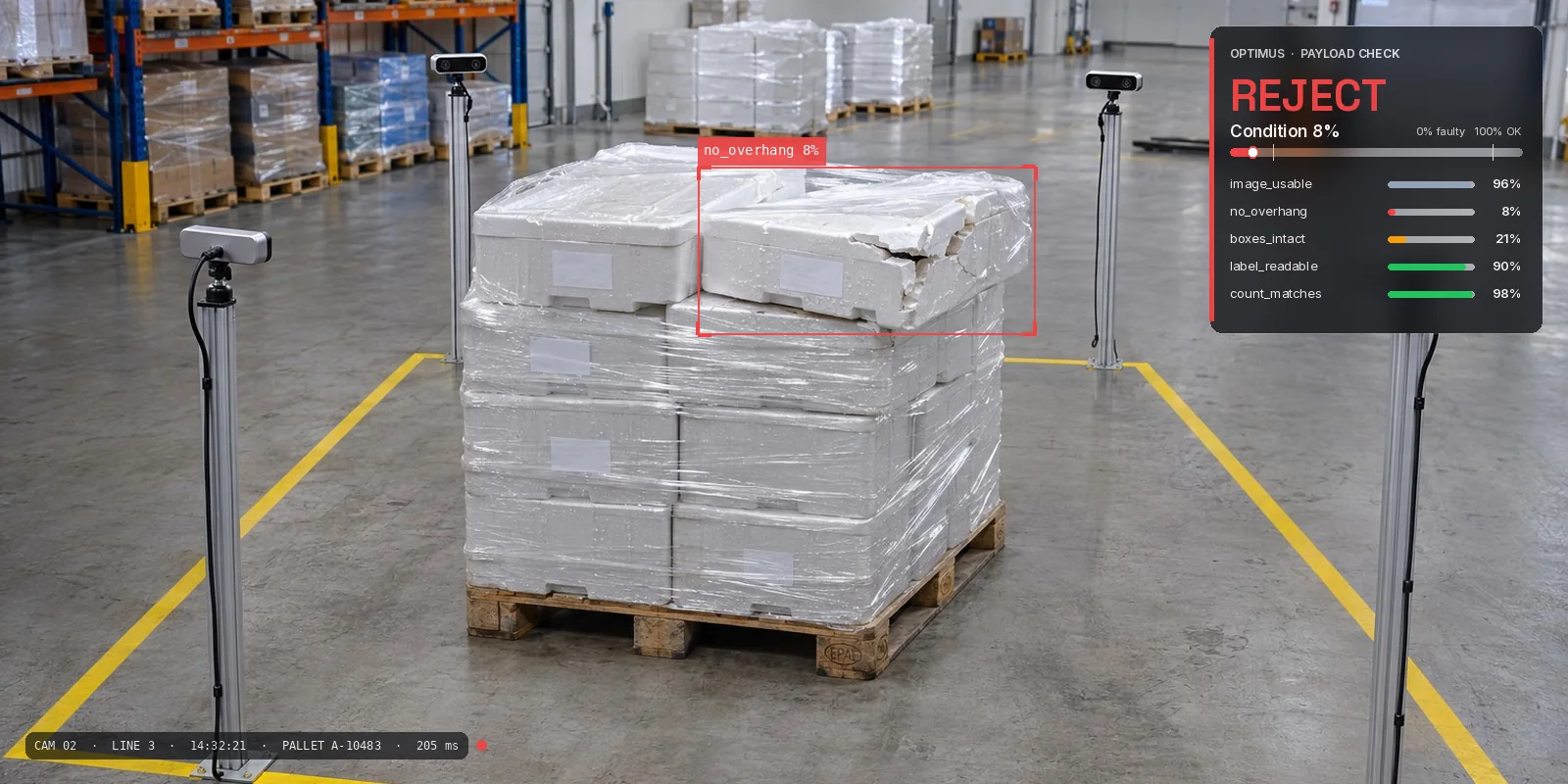
Optimus scores every check from 0 to 100%, and the lowest score decides. With typical starting thresholds, 90% or more passes, 15% or less is rejected, and anything in between goes to an operator together with the image. An unclear image is never guessed: it goes to manual check as well.
Custom AI Vision, and the Automation Around It
We take on the vision tasks standard systems can't handle, then build the automation that acts on the result: robots, machines and the line itself.
Built for demanding tasks
Products that vary in shape, colour, position or condition, where rule-based vision gives false rejects. AI models learn that variation from images of your own products.
Automation on top of the vision
Optimus doesn't stop at a verdict. It orchestrates the line and controls robots, PLCs and machines, using ROS2, Node-RED and standard industrial protocols.
Our own software, customized
Every solution runs on Optimus, Byte Motion's own software, customized to your products and process instead of being built from scratch for each project.
Easy to integrate
We work together with any robot integrator you prefer, or bring in our own robotics partners. Optimus works with cameras and robots from different manufacturers, so it fits into the line you already have.
People in the loop
When the AI is unsure, the case goes to an operator with the image instead of being guessed. Human Assisted Vision keeps the line running.
Support in production
The licence includes support. Standard gives a same-business-day response; Premium responds within 2 hours, 24/7, for production stops.
From Pre-Study to Production
Every project starts small and on your own products, so you know whether the task can be solved before you invest in a production cell.
Pre-study
About €10,000 · 1–3 weeks
We test the task on your own products and show whether it can be solved reliably enough to justify a production cell.
Production cell
€10,000–€30,000
Optimus customized for your line, installed, integrated with your robots, PLCs and machines, and commissioned. Includes a 12-month warranty and licence with Standard support.
Licence and support
About €500–€1,500 per month and system
After the first 12 months, the licence keeps the system running with updates and support.
Prices in EUR, excluding VAT.
Real-World Results
Published examples from battery sorting, recycling, food processing, and industrial inspection projects across Scandinavia and Europe.
Guides to Industrial AI
Straight answers to the questions we hear most: how AI vision decides, what it costs, and when it beats rule-based vision.
- AI automation for the food industry — how it works
- How an automated pallet inspection system works
- Build vs. buy: industrial AI vision system
- How AI decides which pallets can ship
- How AI vision-guided pick and place works
- How AI quality control works on a production line
- How AI waste sorting works in recycling plants
- Traditional vision vs AI vision: what's the difference?
Industries we serve
Frequently Asked Questions
What does Byte Motion do?
Byte Motion is a team of computer vision and robotics experts. We build custom AI vision solutions for demanding production tasks, and the automation on top of them: orchestrating the line and controlling robots, PLCs and machines. Every solution runs on Optimus, our own software, which we customize for each customer. We work with food and seafood producers, recyclers, waste operators and manufacturers across Scandinavia and Europe.
Does Byte Motion make cameras or sell an off-the-shelf product?
No. Byte Motion builds software and integrates the hardware around it. Optimus works with 2D, 3D, line-scan and hyperspectral cameras from different manufacturers and with ABB and other industrial robots, so the hardware is chosen for the task. Each solution is customized for the customer's products and line.
Do you work with our robot integrator?
Yes. We work together with any robot integrator you prefer, and with your own technical team. Optimus is built to be easy to integrate: it connects to robot controllers, PLCs and production systems over ROS2, OPC UA, MQTT, REST and custom protocols. If you don't have an integrator, we can bring in trusted robotics, end-of-arm tooling and mechanical engineering partners.
What can automated pallet inspection check?
3D cameras around the pallet check the load before it ships: overhanging boxes, broken or deformed boxes, the box count against the expected quantity, and label position and barcode readability. Each pallet gets a pass, reject or manual-check verdict that is sent to the PLC, WMS or ERP, and a photo of every pallet is archived as evidence.
What happens when the AI is not sure?
Every check gets a score from 0 to 100%, and the lowest score decides. With typical starting thresholds, 90% or more passes, 15% or less is rejected, and anything in between goes to an operator together with the image. If the image itself cannot be trusted, for example because of glare, the item also goes to manual check instead of being guessed.
Can AI vision replace a rule-based system that rejects too much?
Often, yes. Rule-based vision works when products look the same every time, and gives false rejects when they vary in shape, colour, position or condition. AI models learn that variation from images of your own products. On a sausage line with six ABB FlexPicker robots, Byte Motion replaced a competitor's vision system that was not working.
What does an AI vision project cost and how long does it take?
A pre-study costs about €10,000 and takes one to three weeks. A production cell costs €10,000–€30,000 and includes a 12-month warranty and licence with Standard support. After that, the licence is about €500–€1,500 per month and system. Most production cells are delivered within a few months after the pre-study. Prices are in EUR, excluding VAT.
Can a drone navigate without GPS?
Yes. Byte Motion's visual localization software estimates a drone's position by matching its onboard camera feed against satellite imagery in real time, so navigation continues when GPS is jammed or unavailable. It has been demonstrated in a hardware-in-the-loop simulation with a physical flight controller.
Do you develop with NVIDIA Isaac?
Yes. We build digital twins of robot cells in NVIDIA Isaac Sim, train perception models with synthetic data and validate behaviour in simulation, so integration problems show up before the hardware is commissioned.
Where is Byte Motion based?
Byte Motion AB is headquartered in Västerås, Sweden, with offices in Norway, Spain and Croatia. We have built industrial AI systems since 2017.
How do we get started?
Send us photos or a video of the process and describe what you want to automate. We reply within one business day, free of charge, and the first step is usually a pre-study on your own products.